
Quadriceps Strain Treatment – Sports & Spinal Physio
Introduction
A quadriceps strain can be painful and frustrating, especially if it affects running, sprinting, kicking, squatting or training. This page is for teenagers and adults aged 16–55, including footballers, sprinters, runners and CrossFit individuals who have pain at the front of the thigh.
You may feel tightness when walking or bending your knee, pain during faster movements, tenderness in the thigh, or reduced strength and power. Some people also notice bruising, which can feel worrying.
Most quadriceps strains recover well with conservative management and progressive rehabilitation. Mild to moderate pain and tightness early on do not always mean you have a severe tear. At Sports & Spinal Physio in Brentwood, we can assess your injury, explain what is happening and guide you safely back to sport or training.
What is a Quadriceps Strain?
The quadriceps are a group of muscles at the front of your thigh. They help straighten your knee, support squatting, absorb impact when running, and produce power for sprinting, jumping and kicking.
A quadriceps strain happens when the muscle is overloaded or stretched beyond what it can tolerate. This may happen suddenly during sprinting, kicking or explosive training, or gradually if the muscle is repeatedly overloaded.
The strain can range from mild irritation to a more significant muscle injury. Most cases are managed without surgery and improve with the right balance of protection, strengthening and gradual return to activity.
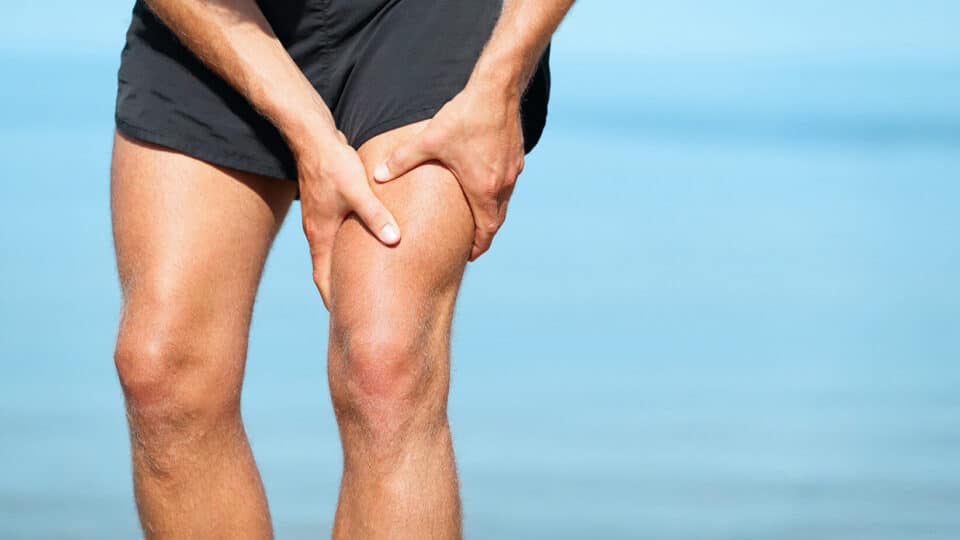
Common Symptoms
Common symptoms of a quadriceps strain include:
- Pain at the front of the thigh
- Tightness when walking
- Tightness when bending the knee
- Pain during sprinting
- Pain when kicking a ball
- Pain during squats
- Tenderness in the thigh
- Bruising in the thigh
- Reduced strength or power
- Difficulty accelerating, jumping or changing direction
- Mild to moderate pain and tightness early in recovery
Common Causes & Risk Factors
Quadriceps strains often happen when the muscle is asked to produce force quickly or tolerate more load than it is ready for.
Common causes and risk factors include:
- Sprinting
- Football kicking
- Running
- CrossFit or high-intensity training
- Squatting under load
- Returning to sprinting too early
- Training through significant pain
- Resting for too long without rebuilding strength
- Stretching aggressively during early healing
- Previous thigh or lower limb injury
- Reduced strength or control through the lower limb
Teenagers and active adults can be affected, especially in sports or training that involve speed, power, kicking, jumping or repeated squatting.
Do I Need to See a Physio, GP or A&E?
It may be okay to monitor mild front thigh pain for a short period if you can walk comfortably, symptoms are improving, and there is no major swelling, bruising or weakness. Reducing high-speed running, kicking and heavy squatting for a short time may help the area settle.
Physio is appropriate if pain continues, you feel unsure about training, strength feels reduced, or you want guidance on returning to sport. A physiotherapist can assess the injury, check your movement and strength, and help you progress safely.
You should seek urgent medical advice from a GP, NHS 111 or A&E if you have:
- Severe swelling
- Extensive bruising
- A visible bulge or change in the shape of the quadriceps
- Localised bruising with a noticeable lump
- Inability to walk
- Inability to lift the leg or straighten
These symptoms may suggest a more significant injury and should be checked.
How We Assess and Treat This at Sports & Spinal Physio
At Sports & Spinal Physio in Brentwood, we start by understanding how the injury happened, where your pain is, and what activities you need to return to. This may include football, sprinting, running, CrossFit, gym training, squatting or day-to-day activity.
Your assessment may include checking thigh tenderness, knee movement, hip movement, quadriceps strength, walking pattern, squatting ability and lower limb control. We may also look at sport-specific movements when appropriate, such as running mechanics, kicking preparation or landing control.
Treatment may include:
- Strength and rehabilitation exercises
- Load management education
- Gait and movement analysis
- Shockwave therapy, where appropriate
- A lower limb rehabilitation programme
Our focus is on progressive rehabilitation. Rest can help calm symptoms early on, but resting for too long does not rebuild strength or power. Most quadriceps strains are managed conservatively and can return to sport within 6–12 weeks with structured rehab, depending on severity and sport demands.
What You Can Do at Home
In the early stages, try to avoid activities that clearly increase pain, such as sprinting, kicking, jumping or heavy squatting. This does not always mean you need to stop all exercise.
You may find it helpful to:
- Keep walking within a comfortable range
- Temporarily reduce running speed, hill work and explosive training
- Avoid aggressive stretching during early healing
- Avoid training through significant pain
- Use gentle movement to maintain comfort
- Return to strengthening gradually
- Build back to sprinting, kicking and sport in stages
- Monitor how symptoms respond over the next 24–48 hours after activity
The aim is to keep the thigh active without overloading it too soon. A structured plan can help reduce the risk of returning too early and irritating the injury again.
Frequently Asked Questions
How long will it take to heal?
Recovery time depends on how severe the strain is, where the injury is, and what sport or training you want to return to. Many quadriceps strains can return to sport within 6–12 weeks with structured rehab, but some mild cases settle sooner and more significant injuries may take longer.
Should I stop training completely?
Not always. You may need to stop sprinting, kicking, jumping or heavy squatting for a while, but complete rest is rarely needed for the whole recovery. The right level of modified activity can help maintain fitness while the muscle heals.
Why does it still feel tight?
Tightness is common after a quadriceps strain and does not always mean the muscle needs aggressive stretching. It may reflect sensitivity, reduced strength, healing tissue or the muscle not yet tolerating load fully.
Do I need a scan?
Many quadriceps strains can be assessed and managed without a scan. A scan may be considered if symptoms are severe, there is significant bruising or deformity, or recovery is not progressing as expected.
When can I return to sport?
Return to sport depends on pain, strength, movement quality and your ability to perform sport-specific tasks such as sprinting, kicking, squatting or changing direction. Returning too early can increase the risk of re-injury.
Is stretching the best way to recover?
Aggressive stretching early on can sometimes irritate a healing muscle. Recovery usually needs a gradual strengthening and loading plan rather than stretching alone.
Have I torn the muscle badly?
Not necessarily. Mild to moderate pain and tightness are common early on and do not automatically mean a severe tear. Severe swelling, extensive bruising, a visible bulge or inability to walk should be checked.
Book a Quadriceps Strain Assessment in Hutton Brentwood
If front thigh pain is stopping you running, kicking, squatting, training or returning to sport, we can help you understand the injury and plan your recovery.
At Sports & Spinal Physio in Hutton Brentwood, we will assess your symptoms, explain what is likely going on and guide you through a structured rehabilitation plan.
Book an assessment or arrange a discovery call for supportive, personalised advice.
Written By Amirtha Raman MSc Phys MCSP
Next Steps: Use one of our 4 options below to get started...
What Our Patients Say
Finally
If you are still considering what to do or just browsing why not download one of our free guides below.