
Hip Flexor Strain Treatment in Hutton, Brentwood – Sports & Spinal Physio
Introduction
Pain at the front of the hip is often assumed to be a hip flexor strain, but this is not always the case. This page is for people aged 16–50, including runners, footballers, rugby players and active adults who have developed pain around the front of the hip or groin area.
You may feel pain when lifting the knee, running, kicking, sprinting, changing direction or returning to sport. A simple muscle strain may involve mild pain with good remaining strength, but front-of-hip pain can also come from other causes.
Hip flexor strains are less common than many people think. In children and teenagers, ASIS avulsion fractures can be mistaken for hip flexor strains. In adults, hip stress fractures may also be mistaken for this problem. At Sports & Spinal Physio in Hutton, Brentwood, we can assess you properly before you return to exercise.
What is a Hip Flexor Strain?
The hip flexors are a group of muscles at the front of the hip that help lift the thigh towards the body. They are used when running, sprinting, kicking, climbing stairs and changing direction.
A hip flexor strain means one or more of these muscles has been overloaded or injured. This may cause pain at the front of the hip, especially when the muscle contracts or stretches.
However, pain in the hip flexor area does not automatically mean there is a hip flexor strain. True hip flexor strains are relatively rare. Other conditions can feel similar, including more serious problems that need a different approach.
That is why a full assessment and correct diagnosis are important before returning to training or sport.
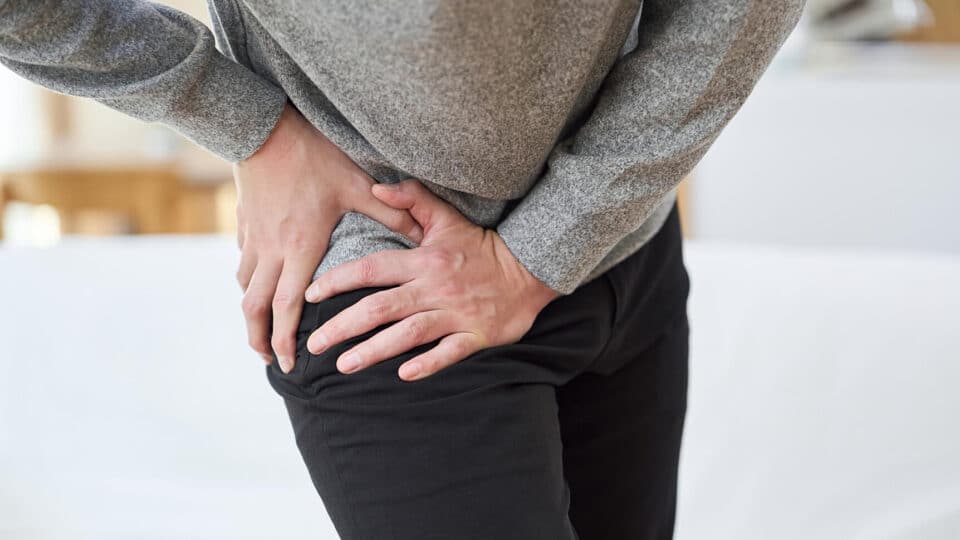
Common Symptoms
Symptoms that may be associated with a hip flexor strain include:
- Pain at the front of the hip
- Pain around the hip flexor area
- Pain when lifting the knee
- Pain with running
- Pain with sprinting
- Pain with kicking
- Pain during football or rugby
- Pain with changing direction
- Mild pain with good remaining strength in simpler strains
- Discomfort returning to sport or exercise
- Reduced confidence loading the hip
Symptoms that are more severe, worsening or affecting your ability to walk need proper assessment.
Common Causes & Risk Factors
Hip flexor strain or front-of-hip pain may be linked with:
- Running
- Sprinting
- Football
- Rugby
- Kicking sports
- Sudden acceleration or deceleration
- Returning to sport too early
- Returning to exercise too early
- Trying to stretch the pain out
- Training through symptoms
- Mistaking another hip problem for a muscle strain
- Incomplete assessment before restarting exercise
- Reduced hip or lower-limb strength
- Poor load management during sport
In children and teenagers, an ASIS avulsion fracture can sometimes be mistaken for a hip flexor strain. In adults, a hip stress fracture may also be mistaken for hip flexor pain.
Do I Need to See a Physio, GP or A&E?
It may be okay to monitor mild front-of-hip pain for a short time if you can walk normally, symptoms are improving, strength is good, and there was no significant injury or illness.
Physio is appropriate if pain affects running, kicking, sport, gym training, walking, stairs or return to exercise. A physiotherapist can assess whether symptoms are consistent with a hip flexor strain or whether another diagnosis should be considered.
You should seek urgent medical assessment if:
- You cannot weight bear
- You cannot walk normally
- You cannot lift your hip or leg
- Pain is severe or worsening
- Symptoms are associated with feeling unwell
- You have a fever
- There are other unexplained symptoms
- Pain followed significant trauma
These signs may suggest something other than a straightforward hip flexor strain and should be checked promptly.
How We Assess and Treat This at Sports & Spinal Physio
At Sports & Spinal Physio in Hutton, Brentwood, we start by understanding how your pain began, where you feel it and what activities provoke it. We will ask about running, football, rugby, sprinting, kicking, training load, recent changes in activity and whether you can weight bear normally.
Your assessment may include checking hip movement, strength, walking pattern, running mechanics, pain with resisted hip flexion, lower-limb control and whether symptoms suggest another cause of front-of-hip pain.
Treatment may include:
- Strength and rehabilitation exercises
- Load management education
- Gait and movement analysis
- Shockwave therapy, where appropriate
- Taping or bracing, where appropriate
The main priority is getting the diagnosis right. From there, we guide you through a graded rehabilitation plan so you can return to running, sport or exercise safely.
We will also advise what to avoid early on, including returning too soon, repeatedly stretching the area or training through symptoms that need assessment.
What You Can Do at Home
Try not to assume all pain at the front of the hip is a simple muscle strain. If symptoms are not improving, are severe, or make walking difficult, it is sensible to get assessed.
You may find it helpful to:
- Reduce running, sprinting and kicking temporarily
- Avoid training through worsening pain
- Avoid aggressive stretching
- Avoid returning to sport too early
- Keep walking within comfortable limits
- Monitor whether you can lift the leg normally
- Build activity back gradually once symptoms settle
- Seek assessment before restarting intense exercise
- Get urgent help if you cannot weight bear or feel unwell
Pain over the front of the hip around the hip flexors is rarely a hip flexor strain, so the right diagnosis matters.
Frequently Asked Questions
Can I train through a hip flexor strain?
Not without proper assessment. Training through front-of-hip pain can make symptoms worse, especially if the pain is not actually coming from the hip flexor. It is safer to identify the cause before returning to sport.
How long will it take to resolve?
This depends on whether it is a true muscle strain and how severe it is. A simple mild strain may settle more quickly, but other causes of front-of-hip pain need different management. Assessment gives a clearer idea of timescales.
Will ice help?
Ice may help some people manage short-term discomfort, but it does not diagnose the problem or fix the cause. The priority is understanding whether the pain is a simple strain or something else.
Should I stretch it?
Avoid trying to aggressively stretch the pain out. Stretching may irritate symptoms and can be the wrong approach if the pain is not actually a hip flexor strain. Gentle movement and guided strengthening are usually safer starting points.
Is front-of-hip pain always a hip flexor strain?
No. Pain in the hip flexor area does not automatically mean a hip flexor strain. In younger people, ASIS avulsion fractures can be mistaken for strains, and in adults, hip stress fractures can sometimes feel similar.
When should I be more concerned?
You should seek urgent assessment if you cannot weight bear, cannot lift your hip or leg, feel unwell, have a fever, or symptoms are severe after injury. These signs may suggest something other than a simple muscle strain.
Can I return to football, rugby or running?
Often, yes, but only once the cause is clear and your hip has rebuilt enough strength and tolerance. Returning too early is one of the most common reasons symptoms continue or come back.
Book a Hip Flexor Assessment in Hutton, Brentwood
If pain at the front of your hip is affecting running, football, rugby, gym training or walking, we can help you understand what is going on.
At Sports & Spinal Physio in Hutton, Brentwood, we will assess your hip properly, check whether it is truly a hip flexor strain, and guide you through a safe return-to-sport plan.
Book an appointment or discovery call for supportive, personalised advice.
Written By Daniel Smith BSc Hons Phys MCSP HCPC
Next Steps: Use one of our 4 options below to get started...
What Our Patients Say
Finally
If you are still considering what to do or just browsing why not download one of our free guides below.