
Groin Strain & Sportsman’s Hernia Treatment in Hutton, Brentwood – Sports & Spinal Physio
Introduction
Groin pain is common in sport and can be frustrating when it keeps returning every time you sprint, kick, twist or return to training. This page is for footballers, rugby players, hockey players, runners, sprinters, gym-goers, dancers and active adults aged around 16–45.
You may feel pain around the groin or inner thigh, discomfort with sprinting or changing direction, pain when twisting or getting up from sitting, or symptoms during coughing and sneezing. Some people notice pain during resisted hip or leg movements, or repeated flare-ups when sport is resumed.
Not all groin pain is a true hernia, and not every groin injury is “just a pulled muscle”. At Sports & Spinal Physio in Hutton, Brentwood, we can assess the source of your symptoms and guide you through a safe return-to-sport plan.
What is Groin Strain & Sportsman’s Hernia?
A groin strain usually involves irritation or injury to the muscles around the inner thigh, often the adductor muscles. These muscles help control the leg during running, kicking, twisting and changing direction.
A sportsman’s hernia, also known as athletic pubalgia, is different from a typical visible hernia. It usually refers to pain around the lower abdominal wall or groin region that is aggravated by sport, twisting, sprinting or kicking.
Groin pain can also come from the hip, abdominal wall, adductor muscles or other nearby structures. This is why a clear clinical assessment is important before deciding whether the problem is a simple muscle strain, a sports-related groin condition or something that needs medical referral.
Persistent groin pain needs more than rest. Identifying the source and progressively rebuilding strength and tolerance is key to returning to sport safely.
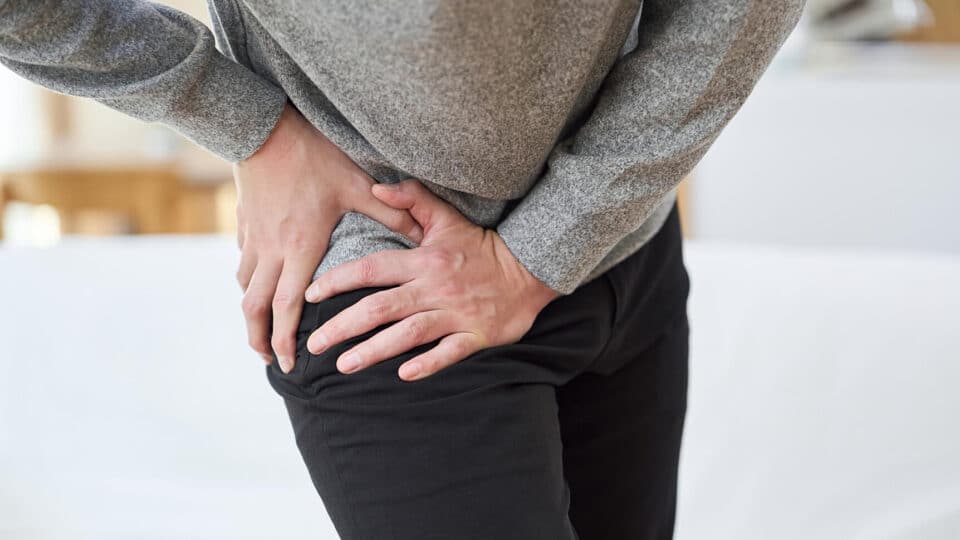
Common Symptoms
Common symptoms of groin strain or sportsman’s hernia-type pain include:
- Pain around the groin
- Pain around the inner thigh
- Pain during sprinting
- Pain during kicking
- Pain when changing direction
- Pain with twisting
- Pain when getting up from sitting
- Discomfort during coughing or sneezing
- Pain during resisted hip or leg movements
- Recurrent groin pain when sport is resumed
- Pain during football, rugby, hockey or running
- Reduced confidence with sport or gym training
Common Causes & Risk Factors
Groin injuries are common in sports and activities that involve speed, power and change of direction.
Common causes and risk factors include:
- Football
- Rugby
- Hockey
- Running
- Sprinting
- Dancing
- Kicking sports
- Twisting movements
- Rapid changes of direction
- Heavy lifting
- Gym training
- Returning to sprinting or kicking too quickly
- Training through significant pain
- Resting without rebuilding strength
- Aggressively stretching a painful groin
- Reduced hip, adductor or trunk strength
- Treating only the painful area without addressing overall load and movement demands
If you can walk, it does not automatically mean you are ready to return to sport. Sprinting, kicking and changing direction place much higher demands on the groin than walking.
Do I Need to See a Physio, GP or A&E?
It may be okay to monitor mild groin discomfort for a short time if pain is improving, you can walk normally, there is no lump, and symptoms are not worsening with daily activity.
Physio is appropriate if groin pain affects sport, running, kicking, gym training, lifting, twisting or return to activity. A physiotherapist can assess whether symptoms are likely coming from the adductor muscles, hip, abdominal wall or another structure.
You should seek urgent medical assessment if you have:
- Sudden severe groin or abdominal pain
- A painful groin lump, especially if it cannot be pushed back in
- Significant swelling
- Severe pain following trauma
- Feeling very unwell alongside groin or abdominal symptoms
These symptoms may suggest something other than a straightforward muscular groin injury and should be checked promptly.
How We Assess and Treat This at Sports & Spinal Physio
At Sports & Spinal Physio in Hutton, Brentwood, we begin by understanding how your groin pain started, where you feel it and what activities trigger it. We will ask about sport, sprinting, kicking, twisting, gym training, heavy lifting, coughing or sneezing symptoms, and previous groin or hip injuries.
Your assessment may include checking hip movement, adductor strength, abdominal and trunk control, resisted hip movements, walking pattern, running mechanics and sport-specific movements where appropriate.
Treatment may include:
- Strength and rehabilitation exercises
- Load management education
- Gait and movement analysis
- Hip programme
Our approach focuses on identifying the source of symptoms and rebuilding capacity gradually. This may include hip, adductor and trunk strengthening, movement retraining and a staged return to running, sprinting, kicking or lifting.
The aim is not simply to rest until pain disappears, but to help the groin tolerate the demands of your sport or activity again.
What You Can Do at Home
Try not to repeatedly stretch a painful groin or return straight to sprinting and kicking as soon as symptoms ease. This can lead to repeated flare-ups.
You may find it helpful to:
- Reduce sprinting, kicking and change-of-direction work temporarily
- Avoid training through significant pain
- Avoid aggressive stretching when the area is painful
- Keep general activity within manageable limits
- Build hip, adductor and trunk strength gradually
- Return to running before full sport where appropriate
- Increase training load step by step
- Avoid relying on rest alone
- Seek assessment if symptoms return every time sport is resumed
A structured strengthening and return-to-sport plan is usually more useful than complete rest alone.
Frequently Asked Questions
Is this a groin strain or a hernia?
It can be difficult to tell without assessment because groin pain can come from the adductor muscles, hip, abdominal wall or other structures. Not all groin pain is caused by a true hernia, and not every case is a simple pulled muscle.
Why does my groin pain keep coming back?
Groin pain often returns when sport is resumed before strength, control and load tolerance have been rebuilt. Rest may reduce symptoms temporarily, but it does not prepare the area for sprinting, kicking, twisting or changing direction.
Can I still play football or go to the gym?
You may need to modify training for a period. Walking or light gym work may be possible, but sprinting, kicking, heavy lifting or change-of-direction drills may need to be reduced until your symptoms and strength improve.
Do I need a scan or surgery?
Not always. Many groin injuries can be assessed clinically and improve with progressive rehabilitation. Imaging or surgical opinion may be considered if symptoms suggest a true hernia, symptoms are severe, or progress is not as expected.
How long will it take before I can return to sport?
This depends on the source of the pain, severity of symptoms and the demands of your sport. A mild muscular injury may recover more quickly, while recurrent or complex groin pain often needs a more structured strengthening and return-to-sport plan.
Should I stretch my groin?
Aggressive stretching is not always helpful, especially if the area is painful. Strength, load management and graded exposure to sport-specific movements are often more important.
Can I play if I can walk without pain?
Not necessarily. Walking places much lower demand on the groin than sprinting, kicking or changing direction. You should be able to tolerate progressive sport-specific loading before returning fully.
Book a Groin Pain Assessment in Hutton, Brentwood
If groin pain is affecting running, football, rugby, hockey, gym training or return to sport, we can help you understand what is causing your symptoms.
At Sports & Spinal Physio in Hutton, Brentwood, we will assess your hip, groin and movement patterns, explain your diagnosis clearly and guide you through a practical return-to-sport rehabilitation plan.
Book an appointment or discovery call for supportive, personalised advice.
Written By Pav Cichecki BSc Phys MCSP
Next Steps: Use one of our 4 options below to get started...
What Our Patients Say
Finally
If you are still considering what to do or just browsing why not download one of our free guides below.