
Achilles Tendinopathy Treatment in Hutton Brentwood – Sports & Spinal Physio
Introduction
Achilles tendinopathy can be frustrating, especially when it affects running, walking uphill, sport, stairs or standing for long periods. This page is for adults aged 30–60, younger athletes, older active adults, runners, footballers, tennis and badminton players, hikers, gym-goers, and people with jobs involving lots of walking, standing, stairs or lifting.
You may feel pain and stiffness in the Achilles tendon, especially first thing in the morning. It may ease as you warm up, then feel sore again after exercise or the next day. Some people notice tenderness, thickening or swelling in the tendon.
Achilles tendinopathy is usually a load-management problem, not a damage problem. The tendon generally improves when it is progressively and appropriately loaded, rather than completely rested. At Sports & Spinal Physio in Hutton Brentwood, we can help you understand your symptoms and build a clear recovery plan.
What is Achilles Tendinopathy?
The Achilles tendon connects the calf muscles to the heel bone. It helps you walk, run, jump, climb stairs and push off through your foot.
Achilles tendinopathy means the tendon has become sensitive to load. This often happens after a change in activity, such as increasing running mileage, hill walking, jumping, calf exercises, sport or time spent standing and walking.
There are two common types:
Midportion Achilles tendinopathy usually causes pain around 2–7 cm above the heel bone. The tendon may feel thickened or lumpy.
Insertional Achilles tendinopathy causes pain where the tendon attaches to the heel bone. It is often aggravated by uphill walking, stairs or fully stretching the calf.
In most cases, Achilles tendinopathy can be assessed clinically without needing imaging.
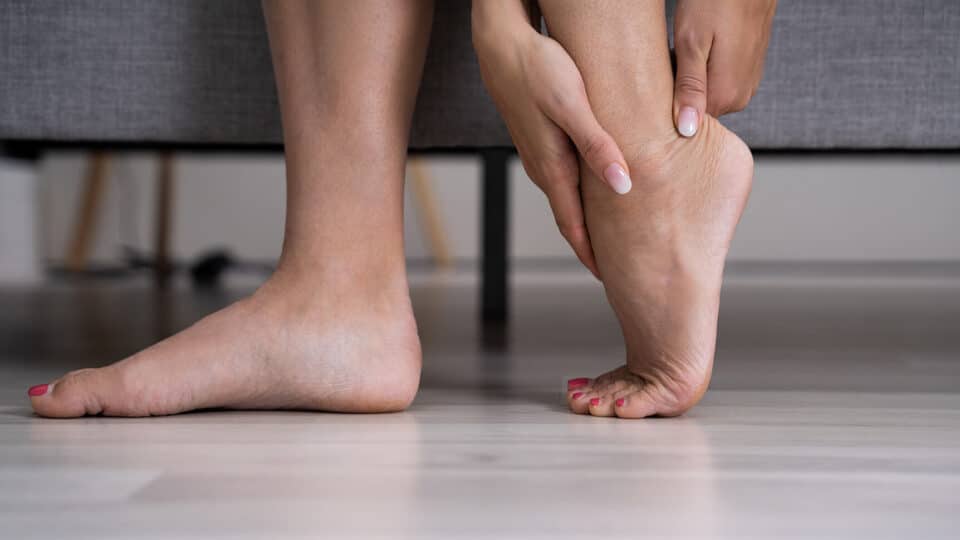
Common Symptoms
Common symptoms of Achilles tendinopathy include:
- Pain and stiffness in the Achilles tendon
- Morning stiffness, especially first thing after getting out of bed
- Pain when starting activity
- Pain that may ease as you warm up
- Pain after exercise or the next day
- Tenderness when squeezing the tendon
- Thickening or swelling of the tendon
- Reduced ability to run
- Reduced ability to jump
- Pain walking uphill
- Pain on stairs
- Pain during calf exercises
- A tendon that feels sore but still works
Midportion symptoms are usually felt slightly above the heel bone.
Insertional symptoms are usually felt directly where the tendon attaches to the heel.
Common Causes & Risk Factors
Achilles tendinopathy is often linked to doing more than the tendon is currently ready to tolerate.
Common causes and risk factors include:
- Recent increase in activity levels
- Running
- Football
- Tennis or badminton
- Hiking
- Jumping exercises
- Calf strengthening exercises
- Prolonged standing
- Prolonged walking
- Climbing stairs
- Frequent lifting
- Returning to sport too quickly once pain settles
- Repeatedly testing the tendon with sprinting, jumping or hard running
- Ignoring increasing pain during training
- Changing several things at once, such as shoes, mileage, surfaces and exercises
- Stopping all activity for weeks or months
- Relying only on massage or passive treatment without strengthening
Pain does not automatically mean the tendon is torn. Symptoms often fluctuate with activity levels.
Do I Need to See a Physio, GP or A&E?
Achilles tendinopathy is usually not serious if symptoms developed gradually, you can still walk normally, pain improves as you warm up, and there has been no sudden “snap” or major injury. It is also reassuring if the pain is localised to the tendon and you do not feel generally unwell.
Physio is appropriate if pain keeps returning, affects running, sport, walking, stairs, work or confidence. A physiotherapist can assess whether your symptoms fit midportion or insertional Achilles tendinopathy and help you build a progressive loading plan.
You should seek same-day medical assessment or A&E if you have:
- A sudden “pop” or “snap” in the Achilles
- Sudden inability to push off through the foot
- Sudden inability to stand on tiptoes
- Rapid swelling and bruising after an injury
- Concern that you may have a complete Achilles tendon rupture
You should seek urgent GP or medical review if:
- The area becomes red, hot and significantly swollen
- You have a fever or feel unwell alongside tendon pain
- Pain is severe and worsening rapidly
- Symptoms developed after taking certain antibiotics, such as fluoroquinolones, or steroid medication
- Pain is associated with unexplained weight loss, night pain or other concerning symptoms
These signs are not typical of straightforward Achilles tendinopathy and should be checked.
How We Assess and Treat This at Sports & Spinal Physio
At Sports & Spinal Physio in Hutton Brentwood, we start by listening to how your symptoms began, how they respond to activity, and what you want to get back to. This may include running, football, racket sports, hiking, gym training, walking, stairs or work.
Your assessment may include checking tendon tenderness, calf strength, ankle movement, walking pattern, running mechanics, balance and how the tendon responds to different loads. We will also look at whether symptoms are more consistent with midportion or insertional Achilles tendinopathy.
Treatment may include:
- Manual therapy
- Strength and rehabilitation exercises
- Load management education
- Gait and movement analysis
- Shockwave therapy, where appropriate
- Tendon Toughening Programme
- Return to Run planning
Our focus is on active rehabilitation and education. Complete rest often delays recovery, while tendons usually respond best to gradual loading and strengthening. Some discomfort during rehabilitation can be acceptable, but the programme should be matched carefully to your symptoms and goals.
What You Can Do at Home
Try not to stop all activity for weeks or months unless you have been advised to do so. Total rest may reduce symptoms briefly, but it does not rebuild tendon capacity.
You may find it helpful to:
- Reduce running speed, hills, jumping or sprinting temporarily
- Keep walking within a comfortable range
- Avoid repeatedly testing the tendon with hard runs or jumps
- Avoid changing shoes, surfaces, mileage and exercises all at once
- Avoid aggressive calf stretching if you have insertional Achilles pain
- Monitor how the tendon feels the next morning after activity
- Build calf strength gradually
- Wear appropriate footwear for your activity
- Use heel lifts or orthotics
- Return to running or sport in stages
- Be patient, as recovery often takes weeks to months
The aim is to find the right amount of load: enough to strengthen the tendon, but not so much that symptoms keep flaring.
Frequently Asked Questions
Will I tear my Achilles if I keep walking on it?
Most gradual Achilles tendinopathy symptoms do not mean the tendon is about to tear. If you can walk normally and symptoms developed gradually, walking is often safe within tolerance. A sudden pop, bruising or inability to push off should be checked urgently.
Do I need a scan or MRI?
Most Achilles tendinopathy can be diagnosed clinically without imaging. A scan may be considered if symptoms are unusual, severe, linked to trauma, or not improving as expected.
Should I stop running completely?
Not always. You may need to reduce speed, distance, hills or intensity for a while, but complete rest is rarely the best long-term answer. A Return to Run plan can help you rebuild gradually.
Why is it worse in the morning?
Tendons often feel stiff after a period of rest, especially first thing in the morning. Morning stiffness can also be a useful sign of how the tendon responded to the previous day’s activity.
How long will it take to get better?
Recovery often takes weeks to months, depending on how long symptoms have been present, your activity level and how the tendon responds to loading. Progress is usually gradual rather than instant.
Is stretching the best treatment?
Not usually. Stretching harder does not always help and may irritate insertional Achilles pain. Strengthening and load management are usually more important.
Is swelling a sign of inflammation?
Some people notice thickening or swelling around the tendon, but this does not always mean simple inflammation. Achilles tendinopathy is usually managed with progressive loading rather than relying only on anti-inflammatory approaches.
Book an Achilles Tendinopathy Assessment in Hutton Brentwood
If Achilles pain or stiffness is affecting your running, sport, walking, stairs, gym training or work, we can help you understand what is going on.
At Sports & Spinal Physio in Hutton Brentwood, we will assess your tendon, explain your symptoms clearly and guide you through a progressive rehabilitation plan.
Book an assessment today or discovery call for supportive, personalised advice.
Written By Heenal Desai MSc Physio MCSP
Next Steps: Use one of our 4 options below to get started...
What Our Patients Say
Finally
If you are still considering what to do or just browsing why not download one of our free guides below.