
Sciatica Treatment in Hutton Brentwood – Sports & Spinal Physio
Introduction
Sciatica can cause sharp, burning or aching pain that travels from the lower back or buttock into one leg. This page is for adults aged 30–80 from all activity levels, sports and occupations who are experiencing radiating leg pain, numbness or pins and needles.
Some people have lower back pain as well as leg symptoms, while others only feel pain in the calf, foot, thigh or buttock. This can make the problem confusing and may lead you to worry that a nerve is permanently trapped.
Sciatica usually means a spinal nerve is irritated or mildly compressed. It does not always mean the nerve is tightly “pinched” or “trapped”. Most cases improve with the right combination of advice, rehabilitation, symptom management and patience. At Sports & Spinal Physio in Hutton Brentwood, we can assess your symptoms and help you understand the safest way forward.
What is Sciatica?
Sciatica describes symptoms caused by irritation of a spinal nerve that contributes to the sciatic nerve. These nerves begin in the lower back and travel through the buttock and down the leg.
The nerve can become sensitive because of inflammation, changes around a spinal disc or mild physical compression. Symptoms may be felt anywhere along the nerve pathway, including the buttock, thigh, calf or foot.
You do not need to have back pain to have sciatica. Some people only notice symptoms below the knee or in the foot.
Sciatica is also different from piriformis-related pain, although the symptoms can sometimes feel similar. A detailed assessment can help identify whether symptoms are more likely coming from the lower back, nerve tissue or another part of the hip and leg.
Common Symptoms
Common symptoms of sciatica include:
- Pain travelling down one leg
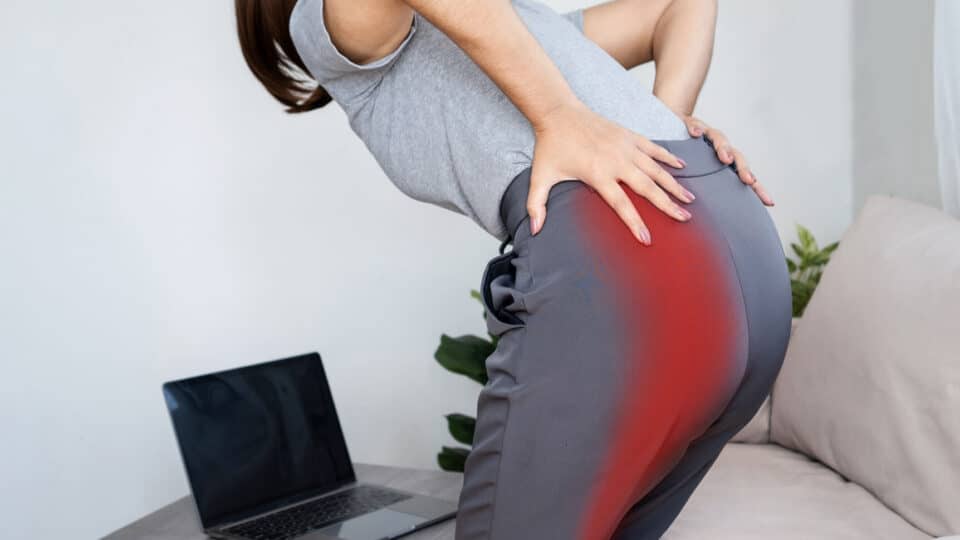
- Pain from the lower back into the buttock or leg
- Buttock pain without significant back pain
- Calf pain
- Foot pain
- Burning or shooting pain
- Pins and needles in the leg or foot
- Numbness in part of the leg or foot
- Symptoms that change with sitting, bending or lifting
- Pain that varies according to position or activity
- Reduced confidence with walking or movement
- Leg symptoms that feel worse than the back pain
Symptoms can fluctuate. A change in pain location or intensity does not always mean the nerve is becoming more damaged.
Common Causes & Risk Factors
Sciatica is usually caused by irritation of a spinal nerve rather than a nerve being permanently trapped.
Factors that may contribute include:
- Lumbar disc irritation or bulging
- Prolonged sitting
- Repeated bending or lifting
- Heavy lifting beyond current capacity
- Sudden changes in activity
- Repetitive work tasks
- Reduced strength or physical capacity
- Returning to exercise too quickly
- Continuing activities that repeatedly aggravate symptoms
- Resting for too long
- Previous lower back or sciatic symptoms
- Fatigue and increased physical stress
Trying to stretch the nerve aggressively or repeatedly pressing on the buttock and leg with a foam roller or ball can sometimes increase sensitivity rather than resolve it.
Do I Need to See a Physio, GP or A&E?
Sciatica is usually suitable for physiotherapy when symptoms affect one leg, you can still walk, there is no significant or progressive weakness, and no warning signs are present.
A physiotherapist can assess your back, nerve function, movement, strength and symptom behaviour. They can also explain which activities are safe and help you avoid unnecessary fear and prolonged rest.
Seek urgent medical assessment if you develop possible cauda equina syndrome symptoms, including:
- New loss of bladder or bowel control
- Difficulty starting or controlling urination
- Numbness around the groin, genitals or saddle area
- Significant weakness in both legs
- Rapidly worsening loss of power
You should also seek prompt GP or medical review if you have:
- A history of cancer with new back or leg pain
- Sudden unexplained weight loss
- Symptoms alongside feeling generally unwell
- Severe symptoms that are rapidly worsening
These signs do not always mean something serious is present, but they need appropriate medical assessment.
How We Assess and Treat This at Sports & Spinal Physio
At Sports & Spinal Physio in Hutton Brentwood, we begin by asking where your symptoms travel, whether you have numbness or pins and needles, and what positions or activities make them better or worse.
Your assessment may include checking lower back movement, leg strength, sensation, reflexes, nerve sensitivity, walking pattern and how symptoms respond to different movements. We also screen carefully for red flags that require medical review.
Treatment may include:
- Manual therapy
- Strength and rehabilitation exercises
- Load management education
- Better Back Programme
- IDD Therapy Programme
Our approach combines advice and education, progressive rehabilitation, appropriate symptom management and patience. Medication may also form part of your care when prescribed or advised by a suitable medical professional.
Passive hands on treatment alone is rarely enough. The aim is to help calm the irritated nerve, restore movement and gradually rebuild your ability to sit, walk, work, lift and exercise.
What You Can Do at Home
Complete rest is rarely the best solution for sciatica. Staying in one position for long periods can increase stiffness and reduce confidence.
You may find it helpful to:
- Change position regularly
- Keep walking within a manageable range
- Reduce activities that repeatedly cause a strong flare-up
- Avoid aggressive nerve stretching
- Avoid repeatedly foam rolling the painful leg or buttock
- Temporarily modify heavy bending or lifting
- Continue safe daily movement where possible
- Follow your rehabilitation plan consistently
- Reintroduce work, sport and gym activity gradually
- Allow time for nerve symptoms to settle
There is no single exercise that immediately “un-traps” a nerve. The right exercises depend on how your symptoms behave during assessment.
Frequently Asked Questions
How long will sciatica take to resolve?
Recovery time varies according to the cause, severity, duration of symptoms and whether there is weakness or numbness. Many cases improve with appropriate intervention, although progress may fluctuate and take time. Most patients take a few months to see improvement.
What is the best exercise to get rid of sciatica?
There is no single best exercise for everyone. The most useful movements depend on where your symptoms are felt, what aggravates them and how the nerve responds during assessment.
What is the best treatment for sciatica?
Treatment often combines education, activity modification, progressive rehabilitation and suitable symptom-relieving treatments. IDD Therapy or manual therapy may be included where appropriate, but active rehabilitation remains important.
How do I un-trap the nerve?
The nerve is often irritated rather than physically trapped. Treatment focuses on reducing irritation, modifying aggravating loads and gradually improving movement, strength and nerve tolerance.
Does foam rolling or rolling on a ball help?
Foam rolling may feel temporarily relieving for some muscle discomfort, but pressing hard into the buttock or leg can aggravate a sensitive nerve. It should not be used to forcefully “release” the nerve.
Is this piriformis syndrome?
Piriformis-related pain and sciatica can produce similar buttock or leg symptoms. Sciatica usually involves irritation of a spinal nerve, while piriformis-related symptoms arise around the deep buttock. An assessment can help distinguish between them.
Do I need surgery?
Most people with sciatica do not require surgery. Specialist review may be considered if there is progressive weakness, cauda equina symptoms, or persistent severe symptoms that do not respond to appropriate conservative treatment.
Book a Sciatica Assessment in Hutton Brentwood
If pain, pins and needles or numbness is travelling into your buttock, thigh, calf or foot, we can help you understand where the symptoms may be coming from.
At Sports & Spinal Physio in Hutton Brentwood, we will assess your back and nerve function, explain your symptoms clearly and guide you through a structured recovery plan.
Book an assessment or discovery call for supportive, personalised advice.
Written By Dan Smith BSc (Hons) Phys MCSP
Next Steps: Use one of our 4 options below to get started...
What Our Patients Say
Finally
If you are still considering what to do or just browsing why not download one of our free guides below.