Degenerative Lumbar Disc Disease Treatment in Hutton, Brentwood – Sports & Spinal Physio
Introduction
Degenerative disc disease can sound worrying, especially when it appears on an MRI report. This page is for adults, particularly from middle age onwards, although disc degeneration can also be seen on scans in younger people. It is also for people with physically demanding jobs, active adults, runners, gym-goers, people who lift regularly, and those with recurrent episodes of low back pain.
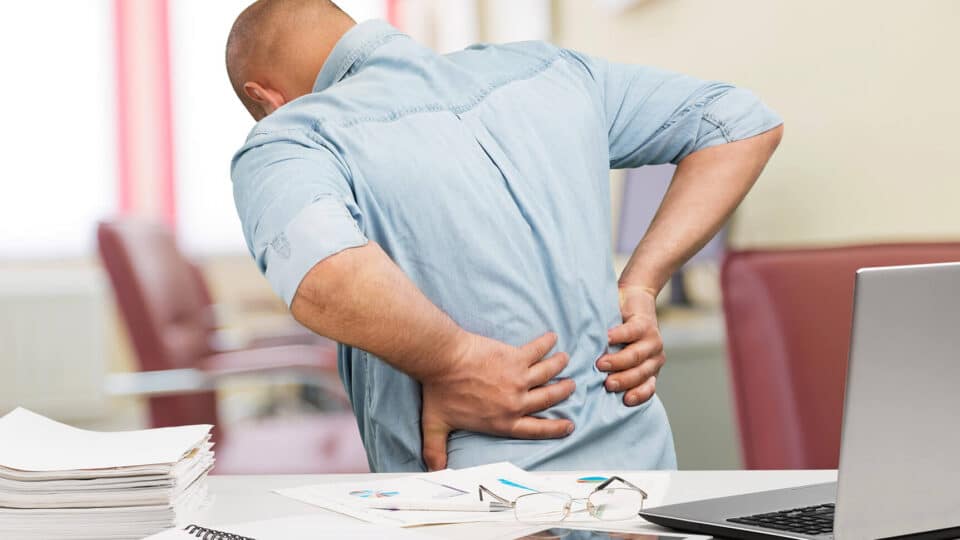
You may feel low back pain and stiffness that comes and goes. Symptoms can be worse with prolonged sitting, bending, lifting or certain activities. If a disc problem irritates a nerve, pain, tingling, numbness or weakness may travel into the leg, often described as sciatica.
Having “degenerative discs” on a scan does not mean your spine is fragile or permanently damaged. At Sports & Spinal Physio in Hutton, Brentwood, we can help you rebuild strength, confidence and movement.
What is Degenerative Disc Disease?
Degenerative disc disease describes age-related changes in the discs between the bones of the spine. Despite the word “disease”, it does not always mean something serious or progressive is happening.
Discs naturally change over time. These changes are common and can be seen on MRI scans in people with and without back pain. This means a scan showing degeneration does not automatically explain how much pain someone should have.
In the lower back, disc-related changes may contribute to pain, stiffness or sensitivity. If a nearby nerve becomes irritated, symptoms may travel into the leg, which is often called sciatica.
Your back is not as fragile as your scan might make it sound. The goal is to gradually build your strength, confidence and ability to do the things you enjoy.
Common Symptoms
Common symptoms linked with degenerative disc disease in the lower back include:
- Low back pain
- Low back stiffness
- Symptoms that come and go
- Pain with prolonged sitting
- Pain with bending
- Pain with lifting
- Pain during certain activities
- Reduced confidence with movement
- Recurrent episodes of back pain
- Pain travelling into the leg
- Tingling in the leg or foot
- Numbness in the leg or foot
- Weakness in the leg
- Sciatica-type symptoms if a nerve is irritated
Common Causes & Risk Factors
Degenerative disc changes can affect anyone. Symptoms are often influenced by strength, activity levels, work demands, confidence and how the back responds to load.
Common causes and risk factors include:
- Middle age onwards
- Recurrent episodes of low back pain
- Physically demanding jobs
- Lifting
- Repetitive loading
- Running or gym training
- Reduced activity or relative inactivity
- Prolonged sitting
- Avoiding bending or lifting for too long
- Resting in bed during every flare-up
- Stopping sport because of fear of disc damage
- Treating an MRI report as a complete diagnosis
- Believing degeneration means the spine is fragile
- Focusing only on “fixing the disc” rather than improving function
Pain can fluctuate without meaning the discs have suddenly deteriorated.
Do I Need to See a Physio, GP or A&E?
It may be okay to monitor mild, familiar low back pain if symptoms are manageable, not worsening, and there are no concerning nerve or bladder and bowel symptoms. Staying gently active and avoiding prolonged bed rest is usually more helpful than protecting the back by resting completely.
Physio is appropriate if low back pain affects sitting, bending, lifting, work, running, gym training, sleep or daily activity. A physiotherapist can assess your movement, strength, nerve symptoms, activity tolerance and confidence, then guide you through a gradual rehabilitation plan.
Call 999 or go to A&E immediately if back pain is accompanied by:
- Numbness around the genitals, anus or buttocks
- Difficulty starting to urinate
- Inability to urinate
- Loss of bladder or bowel control
- Significant or worsening weakness or numbness in both legs
- Severe symptoms affecting both legs
- New changes in sexual sensation or function
These can be warning signs of cauda equina syndrome, a rare but serious condition requiring emergency assessment.
How We Assess and Treat This at Sports & Spinal Physio
At Sports & Spinal Physio in Hutton, Brentwood, we begin by listening to your symptoms, concerns and goals. We will ask about your back pain history, MRI findings, sitting tolerance, bending, lifting, work demands, running, gym activity and any leg symptoms.
Your assessment may include checking back movement, hip movement, strength, nerve-related signs, balance, lifting confidence and how your symptoms respond to different positions or activities.
Treatment may include:
- Hands On Therapy
- Acupuncture
- Strength and rehabilitation exercises
- Load management education
- Taping or bracing, where appropriate
- Our Back for Life Programme
- IDD Therapy Programme
Our approach focuses on helping you understand what your scan means, what it does not mean, and how to move forward safely. We will not treat an MRI report as the whole diagnosis.
Exercise-based rehabilitation can help improve pain, strength, confidence and function. The aim is not to protect your spine forever, but to gradually rebuild what your back can tolerate.
What You Can Do at Home
Try not to rest in bed for long periods or avoid normal movement indefinitely. This can reduce confidence and make the back feel more fragile.
You may find it helpful to:
- Keep gently active during flare-ups
- Avoid prolonged bed rest
- Modify painful activities rather than stopping everything
- Return to bending and lifting gradually
- Build strength over time
- Avoid constantly checking whether every movement is “safe”
- Reduce running or gym load temporarily if symptoms flare
- Gradually return to sport when symptoms allow
- Focus on function rather than scan wording
- Seek help if leg weakness, numbness or severe symptoms develop
Normal movement is not automatically damaging your discs. The goal is to find the right level of activity and build from there.
Frequently Asked Questions
Is my spine wearing away?
No. Degenerative changes do not mean your spine is falling apart. They are common and can appear on scans in people who have little or no back pain.
Do I need an MRI?
Not always. MRI findings do not always match pain levels, and degeneration on a scan does not automatically explain your symptoms. Imaging may be considered if there are severe, worsening or unusual symptoms.
Am I going to make it worse if I exercise?
Usually, exercise does not make degeneration worse. The right type and amount of exercise can improve strength, confidence and function. It may need to be adapted during flare-ups.
Can I still lift weights or run?
In many cases, yes. You may need to reduce load, intensity or volume temporarily, then build back gradually. Stopping permanently is rarely the first answer.
Will I need surgery?
Most people with low back pain and degenerative disc changes do not need surgery. Surgery is usually considered only in specific cases, such as severe or progressive nerve symptoms or symptoms that do not respond to appropriate care.
Does increasing pain mean increasing damage?
Not necessarily. Pain can flare because of sensitivity, workload, sleep, stress, activity change or reduced tolerance. A pain flare does not automatically mean the disc has suddenly deteriorated.
Should I avoid bending and lifting?
Not forever. Bending and lifting are normal movements. The aim is to reintroduce them gradually and build strength so your back feels more confident with everyday loads.
Book a Degenerative Disc Disease Assessment in Hutton, Brentwood
If low back pain, stiffness, sciatica-type symptoms or MRI findings are making you worried about movement, exercise or lifting, we can help you understand what is going on.
At Sports & Spinal Physio in Hutton, Brentwood, we will assess your back, explain your symptoms clearly and guide you through a practical plan to rebuild strength, confidence and function.
Book an assessment or discovery call for supportive, personalised advice.
Written By Pav Cichecki BSc Hons Phys MCSP HCPC
Next Steps: Use one of our 4 options below to get started...
What Our Patients Say
Finally
If you are still considering what to do or just browsing why not download one of our free guides below.