AC joint sprain / Arthritis Treatment in Hutton, Brentwood – Sports & Spinal Physio
Introduction
Pain at the top of the shoulder can make lifting, reaching, sleeping, gym training or sport uncomfortable. This page is for people with AC joint sprains or AC joint arthritis, including contact sport athletes, cyclists, gym users, weightlifters, CrossFit athletes, swimmers, manual workers and anyone with a previous shoulder injury.
An AC joint sprain often causes sudden pain after a fall, collision, direct impact or heavy lifting injury. AC joint arthritis usually develops more gradually, often causing stiffness and pain with reaching across the body, pressing movements, putting on a jacket or lying on that side.
An AC joint sprain or arthritis diagnosis does not mean you have to stop using your shoulder. With the right rehabilitation, gradual strengthening and smart load management, most people can reduce pain and return to the activities they enjoy. At Sports & Spinal Physio in Hutton, Brentwood, we can help you understand your shoulder pain and plan your recovery.
What is AC joint sprain / Arthritis?
The AC joint, or acromioclavicular joint, is the small joint at the top of the shoulder where the collarbone meets part of the shoulder blade. It helps the shoulder move smoothly when you lift, reach, push, pull or move the arm across the body.
An AC joint sprain happens when the ligaments around this joint are stretched or injured. This commonly occurs after a fall, tackle, cycling accident, collision or direct impact to the shoulder.
AC joint arthritis is a gradual change in the joint that can cause pain, stiffness and sensitivity. It is more common from age 40 onwards, but it can occur earlier in people with previous shoulder injuries or high shoulder loads.
Pain does not always mean significant damage. Scan findings do not always match pain levels, and many AC joint problems improve with physiotherapy, strength work and load management.
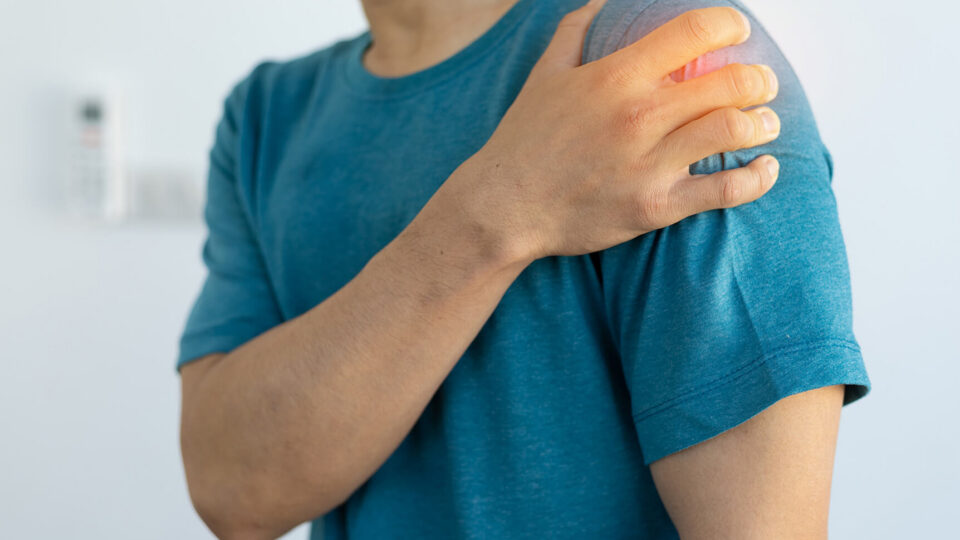
Common Symptoms
Common symptoms of an AC joint sprain include:
- Sudden pain at the top of the shoulder after injury
- Pain after a fall, collision or direct impact
- Tenderness over the AC joint
- Swelling at the top of the shoulder
- Pain lifting the arm overhead
- Pain reaching across the body
- Pain with contact sport or heavy lifting
- A visible bump around the top of the shoulder in some cases
Common symptoms of AC joint arthritis include:
- Gradual pain at the top of the shoulder
- Shoulder stiffness
- Pain reaching across the body
- Pain with pressing movements at the gym
- Discomfort putting on a jacket
- Pain lying on the affected side
- Symptoms that flare with heavier shoulder loading
Common Causes & Risk Factors
AC joint sprains and arthritis can develop for different reasons, but both are often linked to shoulder load, injury history and activity demands.
Common causes and risk factors include:
- Rugby, football, hockey and contact sports
- Cycling and mountain biking falls
- Gym training
- Weightlifting
- CrossFit
- Swimming and overhead sports
- Manual work such as building, decorating or warehouse work
- Physically demanding jobs involving lifting or overhead activity
- Previous shoulder injury
- Returning to heavy lifting or contact sport too quickly after a sprain
- Reduced shoulder blade strength
- Reduced rotator cuff strength
- Poor movement patterns that increase shoulder load
- Avoiding all strengthening because of an arthritis diagnosis
AC joint arthritis does not mean you should stop using the shoulder. The aim is usually to improve mobility, strength and load tolerance.
Do I Need to See a Physio, GP or A&E?
It may be okay to monitor mild top-of-shoulder pain for a short time if there was no significant trauma, you can move the arm, symptoms are manageable and pain is improving. Temporarily reducing pressing, heavy lifting, contact sport or repeated overhead activity may help.
Physio is appropriate if pain affects reaching, lifting, sleeping, gym training, sport, work or confidence using the arm. A physiotherapist can assess the AC joint, shoulder movement, strength, shoulder blade control and activity demands.
You should seek urgent medical assessment if:
- The injury occurred after a significant fall, collision or accident
- There is obvious deformity around the shoulder or collarbone
- You cannot lift or move your arm after injury
- There is severe swelling or bruising
- You suspect a fracture
- You develop numbness, tingling or weakness into the arm or hand
- The shoulder becomes hot, red or swollen and you have a fever
- Pain is severe, worsening or linked with unexplained symptoms such as weight loss or persistent night pain
These symptoms are not typical of a straightforward AC joint sprain or arthritis flare and should be checked.
How We Assess and Treat This at Sports & Spinal Physio
At Sports & Spinal Physio in Hutton, Brentwood, we begin by listening to how your shoulder pain started and what activities are affected. We will ask whether symptoms followed a fall, collision or lifting injury, or whether they developed gradually over time.
Your assessment may include checking shoulder movement, AC joint tenderness, swelling, strength, shoulder blade control, rotator cuff function and painful movements such as reaching across the body, pressing or overhead lifting. We may also consider sport, gym or work demands.
Treatment may include:
- Manual therapy
- Strength and rehabilitation exercises
- Load management education
- Shockwave therapy, where appropriate
- Acupuncture, where appropriate
- Taping or bracing, where appropriate
- Shoulder Pain Programme
Our approach focuses on improving shoulder mobility, strength and confidence. We do not focus only on the AC joint. Shoulder blade strength, rotator cuff strength and movement control can all influence how much load the AC joint has to tolerate.
Medication, injections or rest may help some people with short-term symptoms, but rehabilitation is usually important for longer-term recovery.
What You Can Do at Home
Try not to completely rest the shoulder for too long unless you have been advised to do so. Rest may help symptoms settle early on, but it does not rebuild shoulder strength or confidence.
You may find it helpful to:
- Temporarily reduce heavy pressing or overhead lifting
- Avoid contact sport until the shoulder is ready
- Modify gym exercises that load the top of the shoulder
- Avoid repeatedly testing painful cross-body movements
- Keep the shoulder moving within a comfortable range
- Build shoulder and shoulder blade strength gradually
- Avoid assuming arthritis means you should stop strengthening
- Return to sport or heavy work in stages
- Seek advice if pain is not improving or function remains limited
The aim is to reduce irritation while gradually rebuilding the shoulder’s ability to tolerate the activities that matter to you.
Frequently Asked Questions
Why does the top of my shoulder hurt?
Pain at the top of the shoulder often comes from the AC joint, especially if it is tender to touch or painful when reaching across the body. It may follow an injury, or it may develop gradually with arthritis or repeated shoulder loading.
Do I need a scan for my AC joint injury?
Not always. Many AC joint problems can be assessed clinically. A scan or X-ray may be considered if there was significant trauma, obvious deformity, suspected fracture, or symptoms are not improving as expected.
How long will my shoulder take to heal?
Recovery depends on whether the problem is a sprain or arthritis, the severity of symptoms, your activity demands and how well the shoulder responds to rehabilitation. Mild sprains may settle faster, while arthritis-related pain often needs ongoing strength and load management.
Can I still go to the gym or play sport?
Usually, yes, but activity may need to be modified. Heavy pressing, dips, overhead lifting and contact sport may need to be reduced temporarily while strength and tolerance improve.
Will my shoulder arthritis get worse over time?
Not always. Arthritis changes on scans do not always match pain levels or function. Many people manage AC joint arthritis well with strengthening, movement and load management.
Does the bump on my shoulder mean something serious?
A bump can sometimes be seen after an AC joint injury, depending on the severity. It does not always mean something dangerous, but a new deformity after a fall or collision should be medically assessed.
Is surgery the only option?
No. Most AC joint sprains and many cases of AC joint arthritis can be managed without surgery. Specialist review may be needed for more severe injuries or symptoms that do not improve with appropriate care.
Book an AC Joint Assessment in Hutton, Brentwood
If pain at the top of your shoulder is affecting lifting, reaching, sleep, gym training, sport or work, we can help you understand what is going on.
At Sports & Spinal Physio in Hutton, Brentwood, we will assess your shoulder, explain your symptoms clearly and guide you through a practical rehabilitation plan.
Book an assessment or discovery call for supportive, personalised advice.
Written By Heenal Desai MSc Phys MCSP
Next Steps: Use one of our 4 options below to get started...
What Our Patients Say
Finally
If you are still considering what to do or just browsing why not download one of our free guides below.