
Hip Labral Tears / Impingement (FAI) Treatment – Sports & Spinal Physio
Introduction
Hip labral tears and femoroacetabular impingement, often called FAI, can feel worrying when you have deep groin pain, clicking or a pinching feeling at the front of the hip. This page is for adults aged 18–50, including runners, footballers, rugby players, dancers, gym-goers, weightlifters, hockey players, and people with jobs involving prolonged sitting, driving or repetitive bending.
You may notice pain when sitting for long periods, squatting, lunging, running or bringing your knee towards your chest. Some people feel catching, locking, clicking or stiffness in the hip.
A diagnosis of a labral tear or FAI does not automatically mean surgery, permanent damage or the end of sport. At Sports & Spinal Physio in Hutton Brentwood, we help you understand your hip pain and build a clear plan to return to activity with confidence.
What is Hip Labral Tears / Impingement (FAI)?
The hip is a ball-and-socket joint. The labrum is a ring of cartilage around the socket that helps support and guide hip movement.
A hip labral tear means there is a change or irritation involving this cartilage ring. Femoroacetabular impingement, or FAI, describes a situation where the shape or movement of the hip may contribute to pinching or irritation during certain positions, such as deep squatting or bringing the knee towards the chest.
Symptoms are often mechanical, meaning they are related to movement, load, position and strength. In many cases, symptoms improve with activity modification, targeted rehabilitation and a gradual return to sport or gym training.
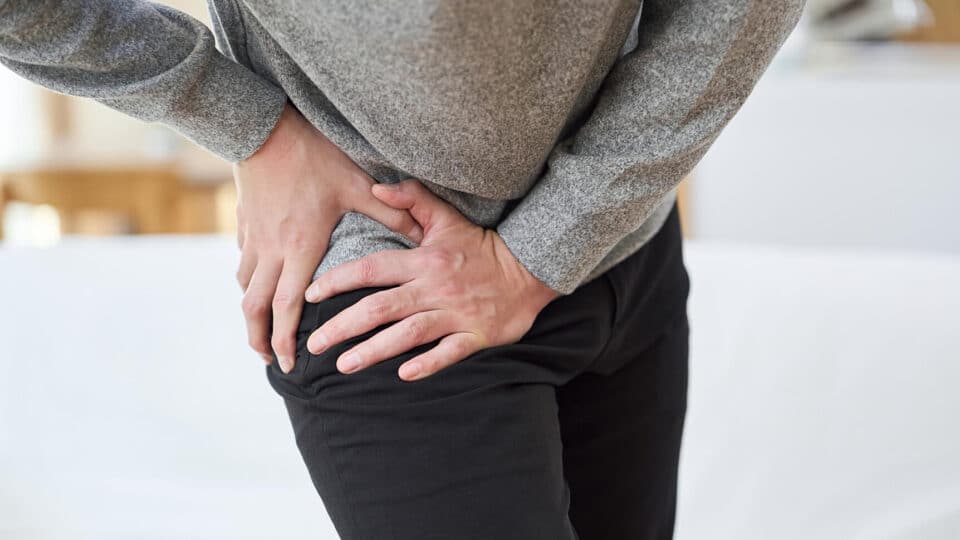
Common Symptoms
Common symptoms of hip labral tears or FAI include:
- Deep groin pain
- A pinching sensation at the front of the hip
- Pain when sitting for long periods
- Discomfort with squatting
- Pain during lunges
- Pain during running
- Clicking in the hip
- Catching or locking sensations
- Hip stiffness
- Reduced flexibility
- Difficulty bringing the knee towards the chest
- Symptoms that gradually develop rather than appear suddenly
Common Causes & Risk Factors
Hip labral tears and FAI symptoms are often linked to how the hip is loaded and moved over time.
Common causes and risk factors include:
- Running
- Football
- Rugby
- Dancing
- Hockey
- Gym training and weightlifting
- Repetitive squatting or lunging
- Prolonged sitting
- Driving for long periods
- Repetitive bending at work
- Returning to sport too quickly after symptoms settle
- Repeatedly stretching an already irritated hip
- Reduced strength around the hip and trunk
- Focusing too heavily on scan findings
- Avoiding all exercise due to fear
A scan may show a labral tear, but this does not automatically mean the scan finding is the only reason for pain or that surgery is required.
Do I Need to See a Physio, GP or A&E?
It may be okay to monitor mild hip symptoms for a short time if you can walk normally, symptoms are not worsening, and you do not have severe night pain, swelling, redness or unexplained symptoms. Gentle movement and avoiding repeated painful positions may help.
Physio is appropriate if hip pain affects running, gym training, sport, sitting, squatting, lunging or confidence with movement. A physiotherapist can assess hip strength, mobility, movement control and loading tolerance, then help you plan a gradual return to activity.
You should seek urgent medical advice from a GP, NHS 111 or A&E if you have:
- Inability to bear weight after a fall or injury
- Severe hip pain that came on suddenly without explanation
- Fever, chills or feeling unwell alongside hip pain
- Significant swelling, redness or warmth around the hip
- Severe and unrelenting night pain
- Unexplained weight loss
- Recent history of cancer with new hip pain
- New numbness, weakness or loss of bladder or bowel control
These symptoms are not typical of straightforward hip labral or FAI-related pain and should be checked.
How We Assess and Treat This at Sports & Spinal Physio
At Sports & Spinal Physio in Hutton Brentwood, we start by listening to your symptoms, activity levels and goals. You may want to return to running, sport, heavy lifting, dancing, gym training, or simply sit and move without discomfort.
Your assessment may include checking hip mobility, strength, squatting, lunging, running-related movements, trunk control and gait. We will also look at which positions feel pinchy or restricted, and how your hip responds to changes in load or technique.
Treatment may include:
- Strength and rehabilitation exercises
- Load management education
- Mobility work
- Gait and movement analysis
- A hip-focused treatment programme
Our approach focuses on education, strength training, movement modification and gradual return to activity. Remaining active is usually better than complete rest, but the activity needs to be matched to what your hip can currently tolerate.
What You Can Do at Home
Try not to stop all activity for weeks or months unless you have been specifically advised to do so. Complete rest can reduce strength, confidence and fitness.
You may find it helpful to:
- Reduce deep squats, heavy lunges or repeated pinching positions temporarily
- Modify running distance, speed or hills if symptoms flare
- Break up long periods of sitting
- Avoid repeatedly stretching an already irritated hip
- Keep moving within a comfortable range
- Build hip and trunk strength gradually
- Return to sport in stages rather than all at once
- Focus on what your hip can do, not only what the scan says
The goal is to reduce irritation while improving the strength and control your hip needs for daily life, sport and training.
Frequently Asked Questions
Can I still run or go to the gym?
In many cases, yes. You may need to modify distance, speed, depth, load or exercise choice for a while, but stopping everything is rarely the best long-term solution. A physio can help you find a safe starting point.
Why does my hip click and catch?
Clicking or catching can happen when the hip is irritated, stiff or not tolerating certain movements well. It does not always mean something serious is happening, but it is worth assessing if it is painful or limiting activity.
How long will it take to recover?
Recovery depends on how long symptoms have been present, your sport, strength, mobility and training load. Many people improve with consistent rehabilitation and sensible activity modification, but returning to higher-level sport usually needs a gradual plan.
Do I need an MRI before starting treatment?
Not always. Many people can begin physiotherapy based on symptoms, movement assessment and functional testing. Imaging may be considered if symptoms are severe, unusual or not improving as expected.
If my scan shows a labral tear, do I need surgery?
Not necessarily. A labral tear on a scan does not automatically mean surgery is required. Many people manage symptoms and return to activity with rehabilitation, education and load management.
Is my hip wearing out?
Hip pain with FAI or a labral tear does not automatically mean your hip is wearing out. Symptoms are often influenced by movement, strength, position and activity levels.
Should I avoid squats and lunges forever?
Usually, no. You may need to adjust depth, load or technique for a period, but the aim is often to rebuild tolerance so you can return to the movements that matter to you.
Book a Hip Labral Tear / FAI Assessment at Sports and Spinal Physio
If deep groin pain, hip pinching, clicking or stiffness is affecting your running, gym training, sport or daily life, we can help you understand what is going on.
At Sports & Spinal Physio in Hutton Brentwood, we will assess your hip, explain your symptoms clearly and guide you through a practical rehabilitation plan.
Book an appointment or arrange a discovery call for supportive, personalised guidance.
Written By Amirtha Raman MSc Phys MCSP
Next Steps: Use one of our 4 options below to get started...
What Our Patients Say
Finally
If you are still considering what to do or just browsing why not download one of our free guides below.