
Hip Osteoarthritis Treatment – Sports & Spinal Physio
Introduction
Hip osteoarthritis can make everyday activities feel harder, especially when your hip feels stiff, painful or less mobile than it used to. This page is for adults aged 45+, active older adults, and people with previous hip injuries or longstanding hip stiffness.
You may feel pain in the groin, buttock or thigh. Your hip may feel stiff when you first get up after resting, and you might find it harder to walk longer distances or put on shoes and socks.
A diagnosis of hip osteoarthritis does not mean your hip is “damaged beyond repair”. Many people stay active, exercise and manage symptoms successfully for years without surgery. At Sports & Spinal Physio in Hutton Brentwood, we can help you understand your hip pain and build a clear plan to move with more confidence.
What is Hip Osteoarthritis?
Hip osteoarthritis is a condition that develops gradually over time. It affects the hip joint, where the ball at the top of the thigh bone fits into the socket of the pelvis.
The joint surfaces, surrounding bone, muscles and soft tissues can all become involved. This may lead to stiffness, reduced mobility, pain and changes in how the hip tolerates walking, stairs, exercise or daily activity.
Although osteoarthritis is often described as “wear and tear”, this phrase can be misleading. Hip osteoarthritis does not mean you should stop moving. Staying active and getting stronger is usually more helpful than resting.
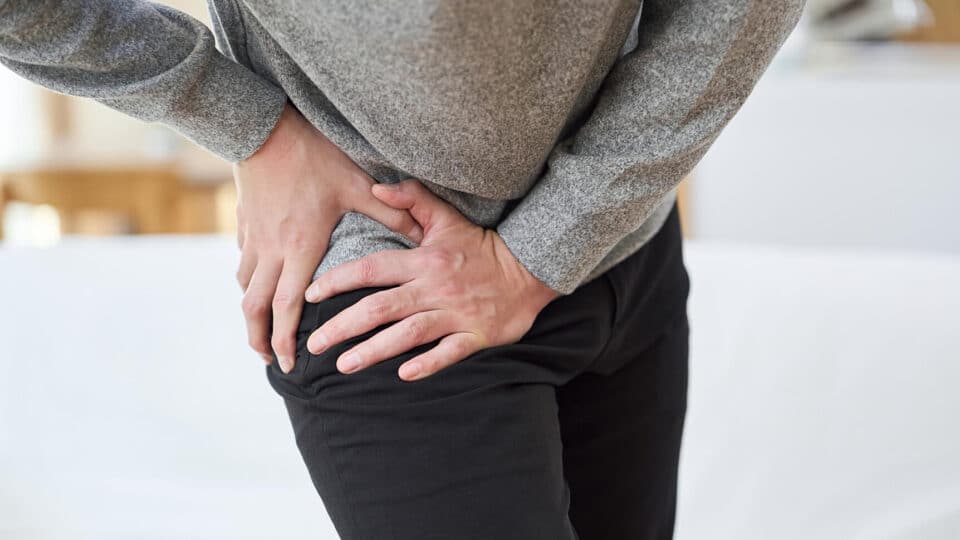
Common Symptoms
Common symptoms of hip osteoarthritis include:
- Groin pain
- Buttock pain
- Thigh and knee pain
- Hip stiffness when getting up after rest
- Morning stiffness
- Difficulty putting on shoes and socks
- Pain walking longer distances
- Reduced hip mobility
- Stiffness after sitting
- Symptoms that gradually worsen over time
- Reduced confidence with stairs, walking or exercise
Common Causes & Risk Factors
Hip osteoarthritis is usually linked to a combination of factors rather than one single cause.
Common causes and risk factors include:
- Age 45+
- Previous hip injury
- Longstanding hip stiffness
- Reduced hip strength
- Reduced hip mobility
- Changes in walking pattern
- Avoiding movement because of fear
- Resting too much
- Stopping all exercise after diagnosis
- Reduced general fitness
- Weight management challenges
- Long-term changes in joint loading
Scans can sometimes show arthritis changes, but scan findings do not always match pain levels. Some people have visible joint changes with manageable symptoms, while others may have more pain with fewer changes.
Do I Need to See a Physio, GP or A&E?
It may be okay to monitor mild hip stiffness or discomfort if symptoms are manageable, improving with gentle movement, and not affecting your daily life too much. Keeping active within your tolerance is usually helpful.
Physio is appropriate if hip pain is limiting walking, stairs, sleep, gym activity, work, hobbies or confidence. A physiotherapist can assess your hip mobility, strength, walking pattern and activity levels, then guide you with a plan that supports long-term management.
You should seek urgent medical advice from a GP, NHS 111 or A&E if you have:
- Sudden inability to bear weight
- Severe pain after a fall or trauma
- Fever, redness or heat around the hip
- Unexplained weight loss or night pain
- Significant swelling
- Rapid worsening weakness or numbness
- Loss of bladder or bowel control
These symptoms are not typical of straightforward hip osteoarthritis and should be checked.
How We Assess and Treat This at Sports & Spinal Physio
At Sports & Spinal Physio in Brentwood, we begin by understanding your symptoms, activity levels and goals. You may want to walk further, return to the gym, manage stairs more easily, keep active, delay surgery, or understand whether a hip replacement might be needed in the future.
Your assessment may include checking hip movement, strength, balance, walking pattern, stair tolerance and how your hip responds to different activities. We will also discuss your current exercise routine, daily workload and anything you may be avoiding because of fear.
Treatment may include:
- Strength and rehabilitation exercises
- Load management education
- Gait and movement analysis
- A hip-focused rehabilitation programme
- Acupuncture
Our approach focuses on active rehabilitation, education and confidence. Pain relief can be helpful, but focusing only on short-term pain relief often misses the importance of strength, movement and general fitness.
Exercise is very helpful for maintaining hip osteoarthritis and reducing the risk of symptoms worsening. Staying active and getting stronger is usually more helpful than prolonged rest.
What You Can Do at Home
Try not to stop all movement after an arthritis diagnosis. Avoiding activity because of fear can lead to reduced strength, fitness and confidence.
You may find it helpful to:
- Keep walking within a comfortable distance
- Break longer walks into shorter, manageable bouts
- Continue gym or exercise activity with suitable modifications
- Work on hip and leg strength gradually
- Avoid doing too much on flare-up days
- Use pacing rather than complete rest
- Keep moving after periods of sitting
- Consider general fitness and weight management as part of long-term hip health
- Track which activities help and which activities cause longer-lasting flare-ups
Exercise should be challenging enough to build strength, but not so much that symptoms flare significantly for days afterwards.
Frequently Asked Questions
Is exercise making my arthritis worse?
Exercise is usually helpful for hip osteoarthritis when it is matched to your current ability. Pain during or after activity does not automatically mean you are damaging the joint, but your programme may need adjusting if symptoms flare for too long.
Do I need a hip replacement?
Not everyone with hip osteoarthritis needs a hip replacement. Many people manage symptoms successfully for years with strengthening, movement, activity modification and general fitness. If surgery is needed, physiotherapy can still help you prepare and recover well.
Should I stop walking or going to the gym?
Usually, no. You may need to adjust distance, intensity or certain exercises, but stopping all activity can make stiffness, weakness and confidence worse. A physio can help you find a sensible level of activity.
Why is my hip stiff in the morning?
Morning stiffness is common with hip osteoarthritis. The joint and surrounding tissues can feel less mobile after rest, then ease as you start moving.
Can physiotherapy actually help arthritis?
Yes. Physiotherapy can help improve strength, mobility, walking tolerance, confidence and activity management. It cannot “remove” arthritis, but it can often help reduce symptoms and improve how well you function.
Do I need a scan to confirm hip osteoarthritis?
A scan or X-ray is not always needed before starting physiotherapy. Your symptoms, movement, strength and function can provide useful information. Scans may be considered if symptoms are severe, unusual or not improving as expected.
Is hip arthritis just old age?
No. Age can be a factor, but hip osteoarthritis is influenced by strength, mobility, previous injury, activity levels, general health and joint loading. There is usually a lot you can still do to help manage symptoms.
Ready to Get Started?
If hip pain or stiffness is limiting your walking, gym activity, stairs, hobbies or confidence, we can help you understand your options.
At Sports & Spinal Physio in Hutton Brentwood, we will assess your hip, explain your symptoms clearly and create a practical plan to help you stay active and build strength.
Book an appointment or arrange a discovery call for supportive, personalised guidance.
Written By Amirtha Raman MSc Phys MCSP
Next Steps: Use one of our 4 options below to get started...
What Our Patients Say
Finally
If you are still considering what to do or just browsing why not download one of our free guides below.